The Ultimate Guide to Professional Car Battery Tester in the UK
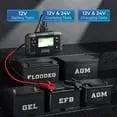
Short answer: a professional car battery tester should identify the battery type and rating, measure cranking capacity under load or conductance, check the charging system, and record the result — all quickly enough to fit a busy schedule. For a fleet running mixed 12V and 24V vehicles, the right unit turns battery care from guesswork into a repeatable, documented process.
This guide is the category overview: what separates a professional tester from a consumer gadget, how to compare the important features, and how the specialised jobs — load testing, CCA and printed reporting — fit together. Use it to build a shortlist, then follow the links for the detail on each area.
What makes a battery tester “professional” at a glance?
- One unit covers 12V and 24V, so vans and lorries share the same tool.
- It measures real cranking capacity and state of health, not just voltage.
- It supports the rating standards (CCA, DIN, EN) your fleet's batteries actually use.
- It records results — ideally on paper — so maintenance files stay consistent across shifts.
What matters when comparing professional testers?
12V and 24V coverage
A mixed fleet is the norm: 12V cars and vans alongside 24V lorries and heavier vehicles. A tester that spans both, drawing power from the 8V–30V battery under test, means one tool and one workflow rather than a drawer of single-voltage devices.
Test method and capacity
Professional units measure cranking capacity by load or conductance rather than reading voltage. A wide 100–2000 CCA range covers small car batteries through to commercial units. For how load and conductance testing actually work, see our car battery load tester guide.
Rating standards and battery types
Fleet batteries are labelled under different standards, so the tester must accept CCA, DIN and EN inputs and offer profiles for flooded, AGM, EFB and GEL. Entering the right standard is what makes the reading trustworthy; our CCA battery tester guide covers this in depth.
Recording and reporting
For preventive maintenance, the record is as important as the reading. A printed slip filed against a vehicle number builds a history that shows decline over time. Our car battery tester with printer guide explains why printed output matters for consistency.
Build, power and leads
Day-to-day durability counts: an impact-resistant casing, long 1.8 m leads to reach awkward battery positions, and self-powered operation so there is nothing to charge before a shift.
Why static voltage is not enough for preventive maintenance
A battery can show a normal resting voltage and still fail to take a cold cranking load — the failure mode that strands a vehicle on the first shift of a frosty morning. Preventive maintenance depends on measuring capacity, not charge, so a marginal battery is caught during a planned check rather than at the depot gate.
Consistency across shifts and technicians
When different shifts record results in different ways, you cannot compare a vehicle's battery health from one month to the next. A tester with defined inputs (type, standard, rating) and a printed output standardises the process, so any technician follows the same steps and the maintenance file stays comparable. That consistency is what makes trend-based replacement possible.
The cost case
The maths is usually straightforward. A single first-thing no-start — the recovery call-out, a relief vehicle, a delayed route and a driver standing idle — typically costs far more than a professional tester. Catching two or three failing batteries before they strand a vehicle pays for the unit, and everything after that is protected uptime.
Quick buying checklist
- 12V and 24V coverage from a single, self-powered unit.
- 100–2000 CCA range with load, cranking and charging-system tests.
- Selectable CCA/DIN/EN standards and flooded/AGM/EFB/GEL profiles.
- Printed reporting for vehicle maintenance files.
- Durable casing, long leads, clear colour screen and a warranty with UK support.
Where the BattCheck Pro Print fits
The BattCheck Pro Print is a professional-grade tester built for mixed fleets: 12V and 24V coverage powered directly from the 8V–30V battery under test, a 100–2000 CCA range, and selectable CCA/DIN/EN standards with profiles for regular flooded, AGM flat-plate, AGM spiral, EFB and GEL batteries. It runs SOH, load/CCA, cranking and charging-system checks, shows them on a 3.5-inch colour screen, and prints a dated slip on standard 57mm paper for the vehicle file. With an impact-resistant casing and 1.8 m leads, it is £284.10 inc. VAT (£236.75 ex. VAT), with free UK next-day delivery, 30-day returns and a 12-month warranty with UK-based support.
Standardise battery checks across your whole fleet
View the BattCheck Pro Print — £284.10Frequently asked questions
What makes a car battery tester professional rather than a consumer tool?
A professional tester measures cranking capacity and state of health rather than just voltage, supports 12V and 24V systems, accepts the correct rating standards and battery types, and records the result. Those features make it reliable and repeatable across a working fleet.
Can one professional tester cover a mixed 12V and 24V fleet?
Yes. A unit that spans 12V and 24V and draws power from the battery under test handles cars, vans and 24V lorries with one workflow, provided it offers a wide CCA range and the right battery-type profiles.
Why record battery results instead of just reading the screen?
A recorded, dated result filed against a vehicle number builds a history that shows decline over time, so replacement can be planned before a failure. It also keeps results consistent when different technicians and shifts do the testing.
How do I justify the cost of a professional tester?
Compare it with a single first-shift no-start: the recovery, a relief vehicle, a delayed route and idle driver time usually exceed the price of the tester. Catching a few failing batteries before they strand a vehicle covers the outlay.
Ready to equip your workshop with BattCheck?
Upgrade Your Workshop — £284.10